

Let Kids Be a Little Weird: Why Creativity Shouldn't Be Scary
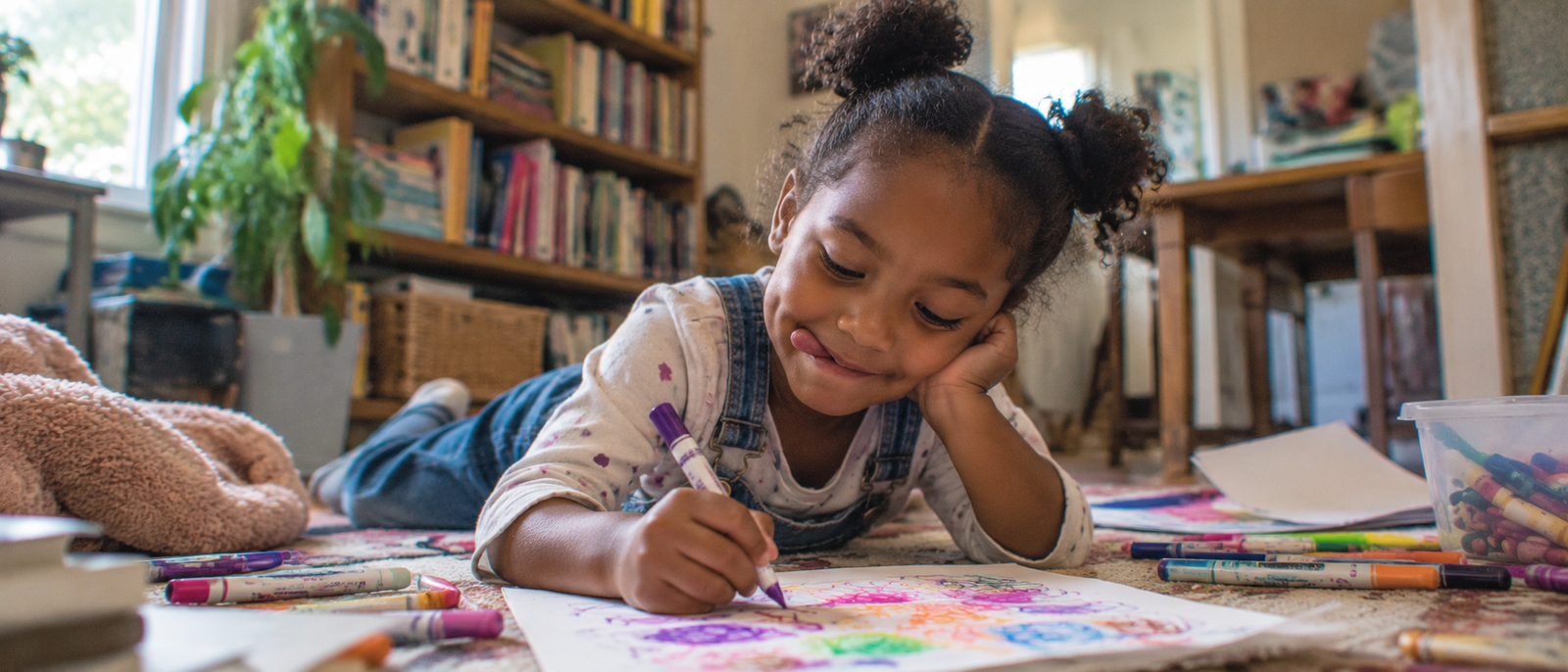
What if the very things that make our students different are the things we should be celebrating?
It’s Halloween season, which means we’re surrounded by ghosts, goblins, witches, and things that go bump in the night, but you know what can be even scarier than a haunted house? A classroom full of kids who are afraid to think differently.
Somewhere along the way, many children begin to figure out that there are certain ways they’re supposed to think, act, learn, and create. There’s a right answer. A right way to solve the problem. A right way to complete the project, and even a right way to color.
Then there’s the student who looks at a perfectly ordinary assignment and asks, “but what if we did it this way?”
The student who wants to build a three-dimensional model instead of writing a paragraph. The child who asks seventeen questions when you only have time to answer one. The kid who turns a simple assignment into an elaborate invention involving cardboard, string, and what appears to be half the classroom supply closet.
Sometimes our first instinct is to redirect.
“Just follow the directions.”
“That’s not what I asked you to do.”
“We don’t have time for that right now.”
Sometimes, those directions really do matter. Classrooms need structure, expectations, and boundaries. Creativity doesn’t mean every student gets to abandon the assignment and start a small engineering firm during math.
But here’s the question worth asking: Are we teaching children how to think, or are we teaching them how to avoid being different?
The Trouble With Being Different
Children are naturally curious. They ask questions, make unusual connections, imagine impossible scenarios, and find solutions that adults might never consider.
To be fair, school does wonderful things. It introduces children to new ideas, gives them opportunities to develop skills, and helps them learn how to work with others, but in our efforts to manage classrooms, meet standards, cover content, and prepare students for assessments, we can sometimes unintentionally reward sameness.
The student who finishes quickly and quietly may be praised for being independent. The student who needs to move, talk through ideas, or explore a different approach may be seen as distracted. The child who gives the expected answer is easy to celebrate, but the child who challenges the question itself? Well, that can be a little more complicated.
Over time, some students learn to keep their unusual ideas to themselves. They stop asking the questions that might make them stand out. They choose the answer they think the teacher wants instead of exploring the answer they genuinely believe. They learn that fitting in can feel safer than standing out.
Gifted Kids Don’t Always Fit Inside the Box
This is especially important when we’re talking about gifted learners.
Gifted students are not all alike. Some are quiet observers, some are intensely curious, some are creative problem-solvers, some want to debate every detail, some have interests that seem years beyond their age, while other areas of development may still look very much like childhood.
They might spend hours researching an obscure historical event, inventing an imaginary world with its own government, or asking questions about the universe that make you reconsider your decision to teach science before coffee.
They may see connections others miss. They may challenge assumptions. They may come up with ideas that are brilliant, impractical, hilarious, or all three at once.
Not every unusual idea is automatically a great one. Students still need opportunities to test their thinking, learn from mistakes, and develop their ideas into something meaningful, but different thinking deserves curiosity before criticism.
Instead of immediately asking, “Why aren’t you doing it the way everyone else is?” we can ask, “Tell me more about what you’re thinking.” That small shift can change the entire conversation. It communicates that a child’s thinking is worth exploring, even when their first idea needs refining.
Creativity Isn’t Just About Art Projects
When we hear the word creativity, we often picture paint, glitter, construction paper, and a classroom that will require approximately three hours to clean, and creativity can certainly look like that. However, creativity is also problem-solving. It’s questioning assumptions, making connections, imagining alternatives, and finding a new way forward when the obvious solution doesn’t work.
Creativity shows up in different ways. It’s the student who develops a different strategy for solving a math problem, or maybe it’s the child who suggests a more efficient way to organize a classroom. Creativity belongs in science, mathematics, writing, engineering, history, and everyday life, and it doesn’t always look neat. As a matter of fact, sometimes it’s messy.
If we want students to become thoughtful problem-solvers, we have to give them opportunities to explore, experiment, make mistakes, and try again. We cannot ask them to think outside the box while insisting that every answer fit perfectly inside it.
What If We Made Room for the Unexpected?
Supporting creativity doesn’t mean abandoning structure. It means being intentional about where we can make room for student choice and original thinking.
Here are a few ways educators can encourage students to embrace their individuality.
- Give students more than one way to show what they know.
Could a student explain a concept through a model, a presentation, a written response, or a visual representation? Different formats can give students meaningful ways to demonstrate their learning while still meeting the same essential objectives.
- Ask questions that invite more than one answer.
Instead of asking only for the correct answer, ask, “What are three ways we could approach this?” or “What might happen if we changed one part of the problem?”
Students need opportunities to practice generating possibilities, not just identifying the expected response.
- Let students pursue their curiosity.
When a student asks an interesting question, consider whether there’s room to explore it. You might not be able to stop the lesson for a thirty-minute investigation into the migratory patterns of monarch butterflies, but you could invite the student to research the question and share what they discover later.
Curiosity doesn’t always need an immediate answer. Sometimes it just needs a place to land.
- Celebrate thoughtful risks, not just polished results.
Praise students for trying a new strategy, revising an idea, asking a thoughtful question, or learning from an unsuccessful attempt.
If we celebrate only perfect final products, students may begin to believe that mistakes are something to hide instead of a natural part of learning.
- Make room for individuality without lowering expectations.
Students can have different interests, approaches, and ways of expressing themselves while still working toward meaningful learning goals.
The goal isn’t to celebrate every idea without question. It’s to create an environment where students feel safe enough to share an idea, receive feedback, revise it, and keep growing.
That’s where creativity and rigor can work together.
A Little Weirdness Can Be a Wonderful Thing
Think about the adults who have changed the world.
Many have been willing to question established ideas, imagine alternatives, and pursue possibilities that others initially dismissed. Innovation often begins when someone looks at the way things have always been done and asks whether there’s another way.
Of course, not every child with an unusual idea will become an inventor, scientist, artist, or entrepreneur, and children shouldn’t have to turn their individuality into an extraordinary achievement to prove that it matters.
Being different has value even when it doesn’t lead to an award, a patent, or a spectacular science fair project. Our job isn’t to decide which children are going to change the world, our job is to help them develop the confidence, knowledge, skills, and curiosity to participate in it fully.
That means making room for the child who thinks differently, the student who needs another approach, the learner whose interests don’t match those of their peers, and the young person who is still figuring out who they are. It means helping students understand that they can learn from others without becoming copies of them.
This Halloween, Let’s Be Less Afraid of Different
This Halloween, we’ll celebrate the unusual, the unexpected, and the things that make us jump. Maybe we can bring a little of that spirit into our classrooms. Let’s be less afraid of the student whose idea sounds strange at first, and less afraid of the question that challenges our assumptions. Let’s make space for curiosity, creativity, and the occasional wonderfully weird idea. Let’s remember that a classroom doesn’t have to be perfectly predictable to be a place where meaningful learning happens.
So go ahead. Let kids be a little weird. Let them wonder. Let them experiment. Let them ask questions, make connections, and discover possibilities we haven’t imagined yet.Give them the tools to think critically, the guidance to grow, and the freedom to explore ideas that are genuinely their own, because the goal of education isn’t to make every child fit the same mold. It’s to help every child discover what they can do when they’re given the opportunity to think for themselves.
A Question to Leave You With
Think about the students in your classroom, school, or life.
What is one thing you could do this week to make a child feel that their different way of thinking is an asset rather than a problem?
Maybe it’s asking one more question before redirecting. Maybe it’s offering a different way to complete an assignment. Maybe it’s simply telling a student, “That’s an interesting idea. Tell me more.” Small moments can send powerful messages.
Let’s make sure the message our students hear is this: You belong here, your ideas matter, and you don’t have to stop being yourself to become a successful learner.